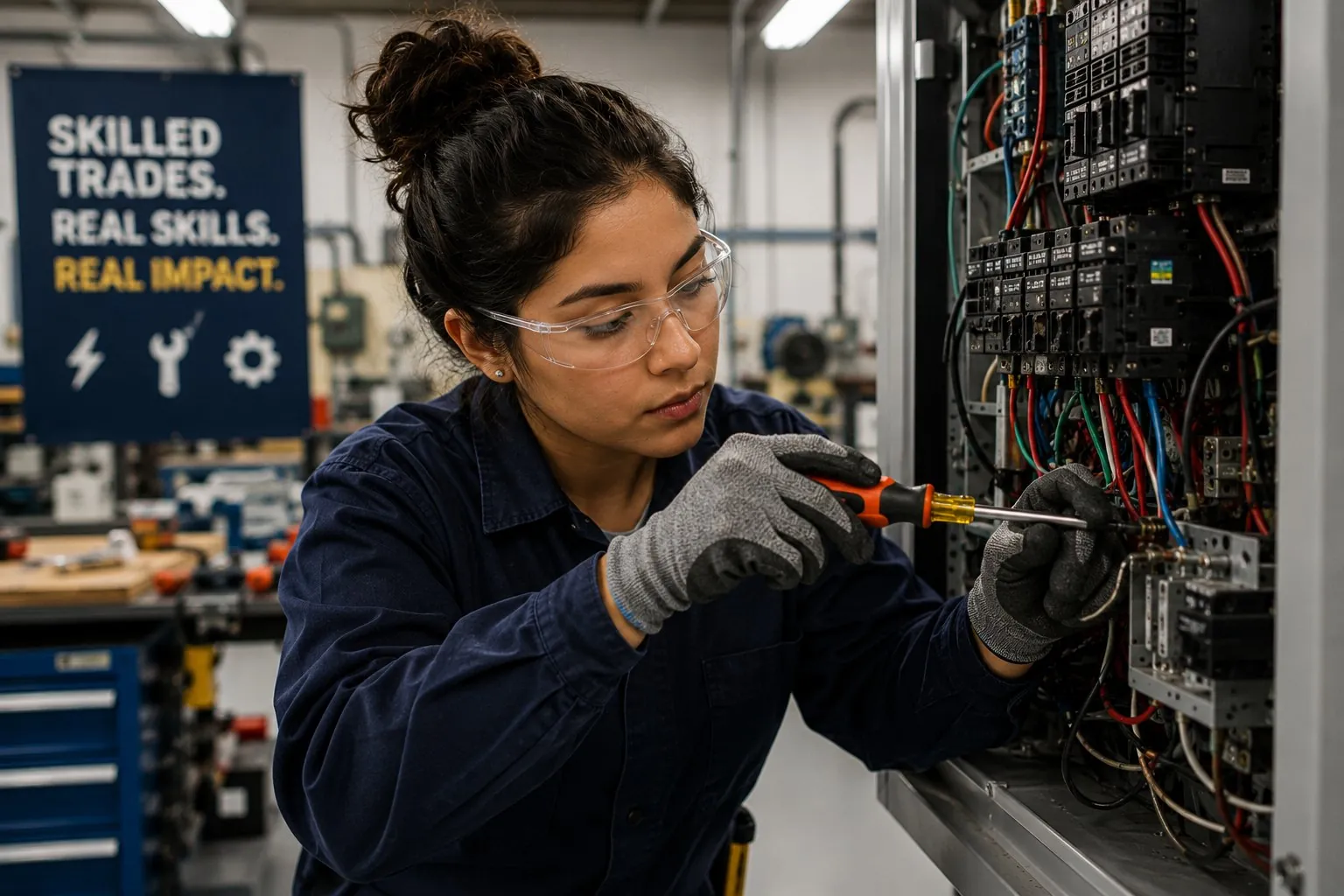
Find out in 60 seconds if your trades or CTE program qualifies for the new Workforce Pell Grant, and what to do next.
Over 905 colleges are already listed on YouthSkilledTrades.com. Get your trades programs in front of motivated students before July Pell funding goes live.
List Your School Free View Listing PlansFor fifty years, federal Pell Grants paid for college. Not trade school. That changes July 1, 2026. Short-term training programs can finally tap the same federal grant money, money students never pay back.
Four things have to line up:
Remedial, correspondence, and study-abroad courses don’t count.
The student side is simpler:
Already hold a bachelor’s and want to retrain in a trade? You can still qualify. A graduate degree, though, rules you out.
Projected average award. The exact figure scales with your financial need and what the program costs.
Students expected to qualify each year once the program goes live.
Governors make the final call, state by state. Early signs point to healthcare and public safety, skilled trades and logistics, and tech and early childhood. Think welders, mechanics, and commercial drivers. Nursing assistants, paramedics, firefighters.
Don’t wait for July. File your FAFSA. Ask any program you’re weighing one blunt question: does this qualify for Workforce Pell? Watch your state’s workforce site as approved programs get posted. Then sit down with a financial aid counselor and confirm it before you count on the money.
The rules are still rolling out, and Governors are still approving programs. Treat this as a guide, not the final word, verify with the school or the U.S. Department of Education before you rely on funding. This isn’t financial aid advice.
Yes. Workforce Pell Grants, launched July 1, 2026, extend Pell funding to short-term workforce training programs, including many trade programs.
The program must be an eligible short-term workforce program at a participating school. Our free checker helps you see whether a program is likely to qualify.
No. Pell Grants are grants, not loans, so they do not need to be repaid in normal circumstances.
Create a free account (or sign in) to save your work, come back anytime, and pick up right where you left off.
Sign Up Free Log In