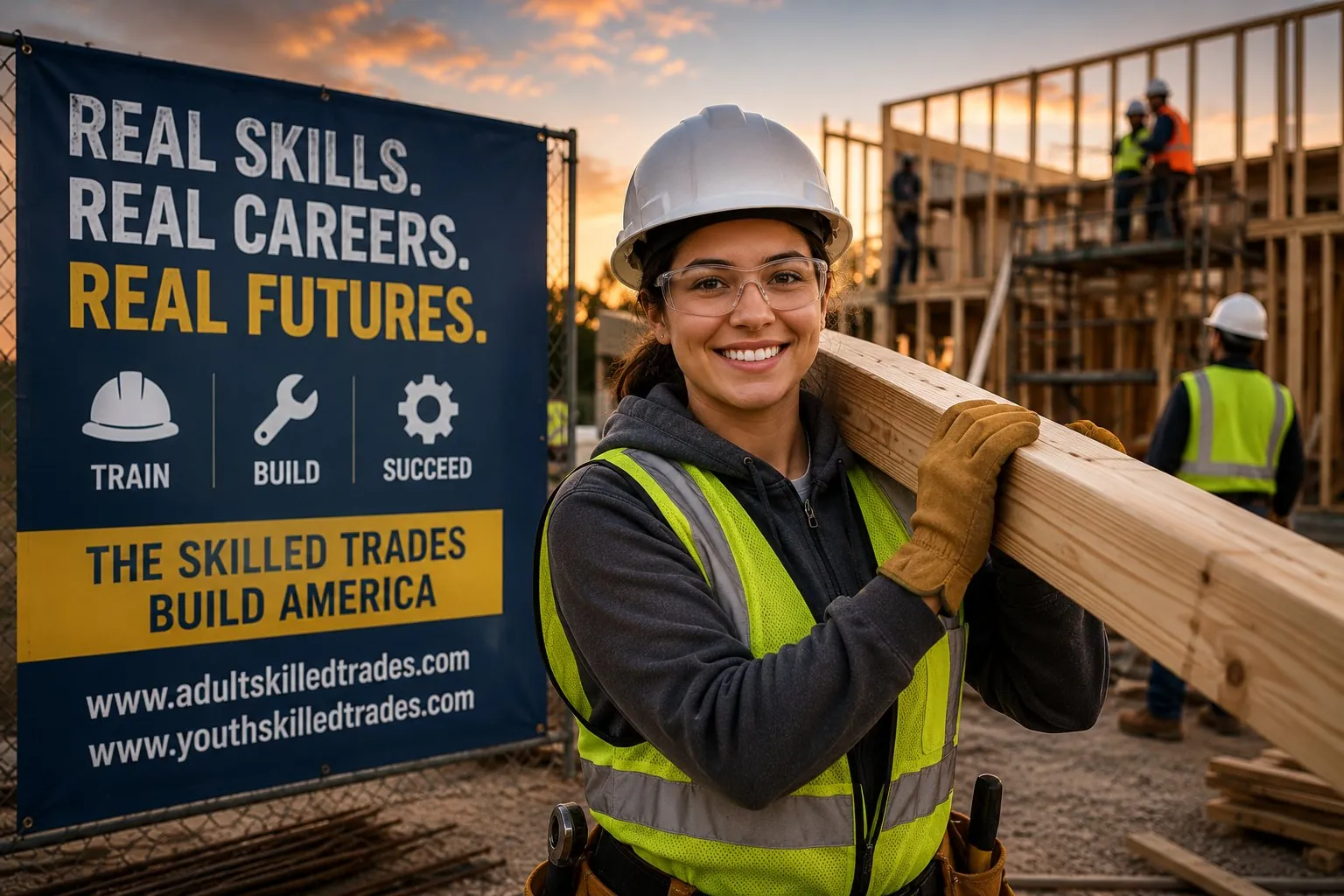
You want the best for your kid. For thirty years, "the best" meant college, full stop. Anything else felt like settling. So when your teenager says they're thinking about a trade, your stomach drops a little. Let's sit with that worry honestly, because it deserves real answers, not a sales pitch.
This is written for the parent who isn't sure. Who wants to support their kid but also wants to know they'll be safe, secure, and proud of where they landed. Fair questions. Here are honest answers.
"Is it safe?"
This is usually the real fear underneath the others, so let's take it head on. Yes, and it's safer every year. OSHA training is mandatory. Apprentices work supervised, not thrown onto a roof alone on day one. Injury rates in the trades have fallen steadily for decades as safety culture, equipment, and training improved. Most tradespeople carry full health insurance and workers' compensation from early in their careers.
And here's the comparison nobody makes: office work has its own health costs, the toll of sitting for forty years, the stress, the burnout. Every path has risks. The trades' risks are visible and managed. We lay out the safety data in detail on our parents' page, read it before you decide based on a fear you haven't checked.
"Will they make enough money?"
More than you expect, and sooner. Your child can start an apprenticeship and earn a paycheck immediately, no tuition, no loans. Their pay climbs on a set schedule. Skilled tradespeople routinely out-earn college graduates in many fields, and the ones who start their own businesses can do far better.
Compare it honestly with our college-vs-trades calculator. A graduate with 35,000 in debt and a 45,000 salary is in a worse spot than a tradesperson with no debt and the same income. Net worth, not job title, is what actually pays the mortgage.
"Is this just a fallback for kids who can't do college?"
No. This is the myth that does the most damage, so let's kill it. The trades demand real intelligence, applied math, spatial reasoning, diagnostics, problem-solving under pressure, running a business. A master electrician troubleshooting a failure is doing sophisticated work. Plenty of people who could have aced college choose the trades because they prefer building something real to sitting in a cubicle. That's not settling. That's knowing yourself.
"What if they change their mind?"
Then they're in a great position. A young person who finishes an apprenticeship at 22 with a skill, no debt, and money in the bank has more options than a peer with a loan and a generic degree, not fewer. Trade skills transfer. The discipline transfers. And debt-free at 22 means the freedom to pivot, go back to school if they want, or start a business. The trades don't close doors. They open them with cash in hand.
How to actually have the conversation
A few things that help, from parents who've been through it:
- Ask, don't assign. Find out what your kid actually likes, working with their hands, solving problems, being outside. Our trade quiz is a low-pressure way to start that conversation together.
- Visit reality. Tour a trade school. Talk to a working tradesperson. Nothing dissolves fear like seeing the actual work and the actual paycheck.
- Look at the money together. Sit down with the salary calculator and the debt calculator. Numbers calm nerves better than opinions.
- Check the funding. See what's covered with our Pell Grant checker before assuming anything costs a fortune. Often it costs far less than you fear, or nothing.
The truth that took us too long to say
We spent a generation telling every kid that college was the only respectable path, and we handed them a trillion dollars of debt for the trouble. Some kids belong in college. Some belong in the trades. The job of a good parent isn't to pick the path society approves of, it's to help your kid find the one that fits who they are. If that's the trades, you're not settling for them. You're setting them up.
Start on our parents' page, built specifically for families weighing this decision.